Common questions about eye laser treatment at London Vision Clinic

"Mr Carp discusses the history and development of laser eye surgery"

Q. What is the waiting list to have London Vision Clinic perform my eye laser procedure?

Generally, waiting lists range from 1 to 6 weeks. Please call one of our Patient Care Coordinators to get a more exact timeframe for your surgery.

Q. Where do you do the treatment?

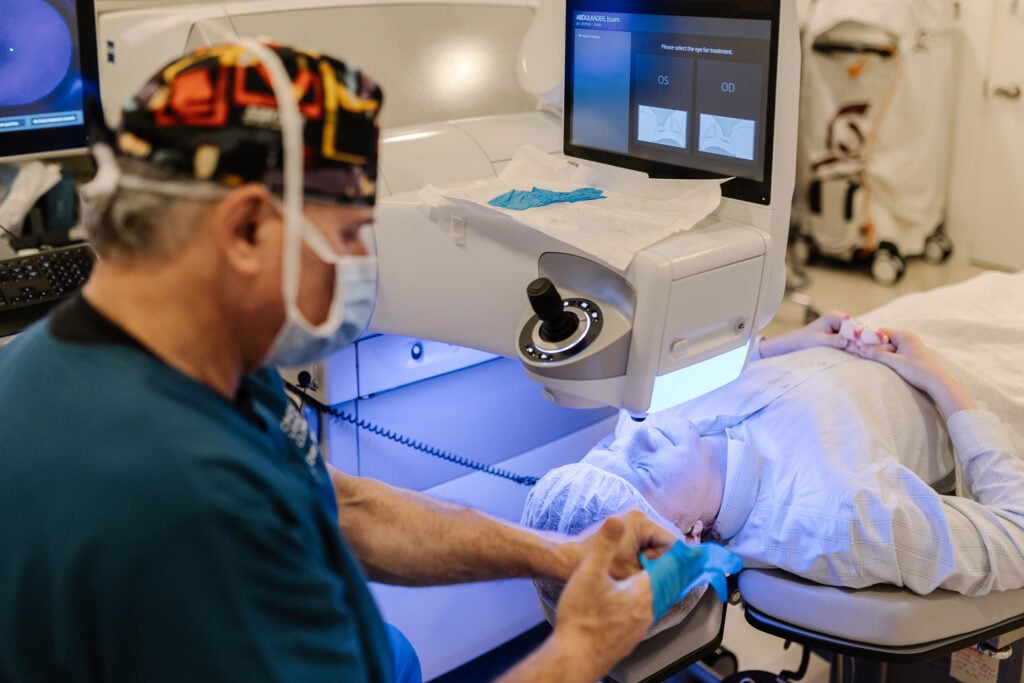
We conduct all laser eye surgery treatments in our clinic on Harley street.

Q. What kind of laser do you use in the laser eye treatment?

Professor Reinstein and Mr. Carp use the Carl Zeiss MEL 80 laser because it features the latest advances in laser technology, and brings the clearest advantages and highest benefits for their patients.

Discussions about excimer laser technology can get technical. Here we discuss some key aspects that will give you the ability to make an informed decision about any treatment you are considering. The important thing to remember is that a good laser is important, but finding a laser eye surgeon who has the experience and expertise to use that laser is critical to successful treatment.

From a patient's perspective, four areas differentiate lasers in use for laser eye surgery. These are:

  • Spot size
  • Eye tracking
  • Treatment time
  • Safety tests

Q. What is spot size?

A laser beam will be a certain size and a certain shape. The point where the laser touches the eye is a "spot". The smaller the spot, the more focused it is, creating a higher intensity beam that moves around the eye at a faster rate. This means the laser only removes the material it needs to, providing a more precise treatment.

At 0.7mm, the MEL 80 has the smallest beam available for most precise treatment; this creates a high intensity (more focused) beam that moves about the eye at a faster rate, necessitating increased reaction time, which the MEL 80 also has. The result is that the laser only removes the material it needs to remove.

BACK TO TOP

Q. What is eye tracking?

Your eye will move during surgery. Eye-tracking technology ensures your safety when this happens. Compensating for eye movement is a key factor in ensuring that the laser delivers its beam in exactly the right place. There are different methods (video infra-red, 3D, LADAR), all of which involve detecting the position of your eye. There is a minor lag between the laser noticing your eye has moved and compensating for that movement. All trackers, to date, provide approximately the same level of delay time - most operate with a delay of less than ten milliseconds (one hundredth of a second).

Q. What is the importance of treatment time?

While the actual laser treatment itself is not painful, the other processes that happen during treatment do cause discomfort. The faster a laser treats your eyes, the more comfortable you will be. There is also evidence that faster treatment means faster recovery.

Q. What is the importance of safety tests?

Every time the laser is used, we first test it on a calibration foil as a final check. This feature enables the surgeon to test-drive the laser, in order to know how the beam will act when it touches the eye.

Q. What is the difference between LASIK, LASEK and PRK?

LASIK, LASEK and PRK are procedures performed on the stromal tissue of the cornea with a laser. Removal of stromal tissue from the cornea does not usually lead to regeneration of stromal tissue. Removal of epithelial tissue does lead to re-growth of epithelium. Therefore, removal of stromal tissue can produce permanent re-shaping of the cornea, thereby changing its focusing power.

LASIK (laser in situ keratomileusis) is a form of outpatient corneal surgery in which a surgeon uses a specialised, precise, and computer-controlled corneal flap-making instrument, called a microkeratome, to create a thin corneal flap of corneal tissue.

A surgeon raises the corneal flap and lays it back whilst still attached to the cornea. The surgeon then uses a state-of-the-art excimer laser to remove a pre-determined amount of corneal tissue from the exposed bed of the cornea.

We base our calculation of the amount of tissue the laser removes on the pre-operative determination of the power of your eye; these measurements are usually in agreement with recent prescriptions for your glasses and/or contact lenses. The surgeon replaces the corneal flap and within minutes, natural forces hold the corneal flap down on the cornea.

Usually, within a few hours, the surface epithelium of the cornea begins to grow over the cut edge of the corneal flap to seal it into position. LASIK is used to correct short-sightedness (myopia), long-sightedness (hyperopia), and astigmatism.

PRK (Photo-Refractive Keratectomy) was the original laser vision procedure and surgeons have successfully used it to treat hundreds of thousands of people since the 1980's. With PRK, the excimer laser is an ultra-precise alternative to traditional scalpel-based refractive surgery procedures, such as Radial Keratotomy (RK), which surgeons rarely perform.

LASEK is a hybrid of photorefractive keratectomy (PRK) and laser-assisted in situ keratomileusis (LASIK), the goal of LASEK is the preservation of the corneal epithelium. Rather than creating a corneal flap with a microkeratome (as in LASIK) or scraping and removing the patient's epithelium (as in PRK), LASEK treats the epithelium with alcohol to loosen and separate it from the stroma and a surgeon then rolls this tissue back. The laser ablates the underlying stroma and the surgeon rolls the epithelial cells back out, repositioned, and smoothed. The potential advantages of LASEK are to reduce postoperative haze, speed visual recovery, and decrease postoperative pain over traditional PRK.

Generally, at London Vision Clinic we only use PRK or LASEK when we are unable to use LASIK. Whilst PRK and LASEK produce good results in the correction of a full range of prescriptions, including myopia, hyperopia, presbyopia and astigmatism, the advantage of LASIK is that recovery is shorter than with PRK / LASEK.

In an expert's hands, visual outcomes between LASIK, PRK and LASEK are the same.
Vision Improvement, Minimal Healing Time, Maximum Convenience

With LASIK, the healing process is significantly reduced, in comparison to PRK and patients can typically return to routine work and leisure activities within a couple of days of treatment. In addition, vision improvement is virtually instantaneous (the so-called "wow effect") and we usually treat both eyes on the same day.
Post-Treatment Aftercare

After treatment, medicated eye drops are used for the first week, or so, to aid the healing process and minimise any temporary discomfort. In addition, patients are required to wear a night shield for the first week to prevent accidental rubbing of the eyes while asleep. Occasionally, we will fit soft contact lenses for the first day to further protect the eyes. We provide the night shields and soft lenses, along with all necessary medication and aftercare as part of the all-inclusive treatment fees at London Vision Clinic.

BACK TO TOP

Q. How exactly does laser vision correction work?

The main function of your eye is to focus light. If you think of it as a camera, the cornea is the lens and the retina is the film. The cornea, on the surface of your eye at the front, provides most of the focusing power. In perfect eyesight, it focuses light rays precisely onto the retina at the back.

Your eye's own internal lens fine-tunes light, so you can see clearly enough to read, for instance. In perfect vision, light enters the eye through the cornea and is focused at a single point on the retina. When you have a refractive error, this means that light rays bend and don't form a sharp focus on the retina. This is normally due to a problem with the length or shape of the eye.

Any operation that corrects the focusing of the eye is called refractive surgery. Laser eye surgery is simply a form of refractive surgery that uses a beam of ultraviolet light to reshape your cornea - the transparent, curved window at the front of the eye. Adjusting the curve of your cornea allows light to be focused correctly on the retina at the back.

Refractive surgery is the world's most common planned surgical procedure. The most popular method is LASIK, which is carried out on more than 90% of patients. The surgeon uses a device called a microkeratome to create a very thin corneal flap of corneal tissue, about a tenth of a millimetre thick. They lift this corneal flap back on a hinge, and the laser sculpts the bed of the cornea. It can flatten the cornea to correct short-sightedness, make it steeper for long-sightedness, and create better symmetry to correct astigmatism. When the surgeon puts the corneal flap back, it takes on this new shape.

With LASIK, the healing process is surprisingly short. In the vast majority of patients, the skin of the cornea (the epithelium) automatically seals the corneal flap within hours of surgery, so you won't need any stitches. Most patients feel little or no discomfort as their eyes heal. People notice significant vision improvement immediately - the 'wow' effect. The rapid visual recovery time means most patients can return to work the next day.

Q. Do you treat both eyes at the same time?

Yes. The surgery performed in our clinic can correct both eyes at the same time. Having your eyes treated at different times extends the healing and takes more of your time. Most patients find it more convenient to have both eyes treated at the same time. We can, however, perform the procedure for each eye separately should you prefer - however, since the preparatory work to do a staged procedure is nearly doubled, there is a 50% extra cost.

Q. What will I feel during the laser eye surgery procedure?

We will give you a topical anaesthetic so the procedure itself is virtually pain-free. During LASIK you may feel some pressure when the corneal flap is created, and some discomfort or irritation for up to 24 hours after surgery. With PRK, your eyes might feel irritated for a week or more after surgery. Your surgeon will provide pain-relieving eye drops to minimise any discomfort.

Q. How long does laser eye treatment take?

The operation takes only minutes, and the laser is only active for seconds. Preparation for surgery on the day takes between 30 minutes to one hour.

Q. Does laser eye surgery hurt?

The procedure itself is pain-free. With LASIK, you may experience a pressure sensation when the surgeon creates the corneal flap, and some discomfort or irritation for up to 24 hours after surgery. With PRK you may experience irritation for one week or more after surgery. Because discomfort can occur in some patients during the healing phase, we provide pain relief medication in eye drop form to help eliminate this.

Q. What happens if I look away, blink, cough or sneeze during the procedure?

Nothing. Although your eye will move during surgery, eye-tracking technology ensures your safety when this happens. Compensating for eye movement is a key factor in ensuring that the laser pulses in to exactly the right place. There are different methods (video infra-red, 3D, LADAR), all of which involve detecting the position of your eye. There is a minor lag between the laser noticing your eye has moved and compensating for that movement. All trackers, to date, provide approximately the same level of delay time - most operate with a delay of less than ten milliseconds (one hundredth of a second).

Q. What is the risk of a complication during laser eye surgery?

Laser eye surgery is safe but no surgery is entirely without some level of risk. The fact is that an expert surgeon will have the knowledge to manage complications properly and will often be able to correct any complications that do occur. In the hands of an expert surgeon, the chance of something going noticeably wrong is around one in 1,000 procedures. The chance of a surgeon facing a situation he or she would not be able to improve, or correct satisfactorily, is about one in 30,000.

BACK TO TOP

Q. Will I need a general or topical anaesthetic during the treatment?

We will give you a topical anaesthetic so the procedure itself is virtually pain-free.

The saying is 'No pain, no gain' but I can honestly say there was no pain involved with the procedure and the gain was instant- I was reading the small print on the back of a medicine packet within seconds. - Pamela A., WP Consultant, from Sutton, Surrey

Q. Can I take a tranquiliser or sedative (i.e. Valium) before the procedure?

We advise you not to take a tranquiliser or sedative before the procedure as you will need to be examined by your laser eye surgeon and will need to be alert to go through the informed consent process. It is extremely rare for a patient to be so nervous that they need a tranquiliser or sedative during the procedure, however, if you would like to discuss this with your laser eye surgeon prior to the actual treatment, you are encouraged do so at that time.

Q. What is wavefront, and is it better than conventional laser eye surgery?

Wavefront measures the unique imperfections of the surface of your eye, called 'higher order aberrations'. These irregularities of your cornea and optical system affect the finer quality aspects of your vision, beyond the normal refractive errors of short-sightedness, long-sightedness, and astigmatism.

A wavefront aberrometer records data from several spots on the surface of your cornea. This produces a map of the imperfections on the surface of your cornea, as well as a visual system analysis that we feed into the laser to achieve better results. The laser must be able to receive these measurements and then apply them directly onto the cornea.

Different analysers measure different numbers of spots, ranging from as low as 60 to as high as 650. The Zeiss WASCA in use at London Vision Clinic has a resolution of 650. A low-resolution analyser is like a watercolour painting. It provides a general impression of the landscape. It measures just a few points and then uses a mathematical formula to work out an approximate image of the rest.

A high-resolution analyser will give as sharp a picture as a photograph. It records much more data, giving a more accurate map of the number and location of imperfections. This means the surgeon can plan your treatment precisely.

Wavefront treatment has received a lot of publicity. Some clinics promote wavefront as if it could cure any imperfections - in reality, it just measures your eyes.

Q. How does treatment for reading vision differ from conventional laser eye surgery?

The procedure to correct reading vision (Laser Blended Vision) does not differ mechanically from conventional laser eye surgery in any way. The only difference is in how we treat each eye in relation to the other. We can achieve the Laser Blended Vision effect with LASIK, PRK or LASEK.

Q. What is IntraLase™, and is it better than conventional laser eye surgery?

This again is basic LASIK, however, instead of using the traditional microkeratome instrument to create the corneal flap, surgeons use a separate femtosecond laser. "Intralase" is the product name used by Advanced Medical Optics (AMO) for their femtosecond laser microkeratome. AMO Intralase, Carl Zeiss VisuMax and Ziemer FEMTO LDV are the leading manufacturers of this technology and they claim that the adoption of these lasers can reduce complications and even increase accuracy of results. Femtosecond treatments are the standard at the London Vision Clinic.

Q. Can I bring anyone with me when I have the procedure?

You are welcome to bring 1 to 2 people with you to the clinic on the day of the procedure, however we only allow clinical personnel in the theatre.

BACK TO TOP

Q. What will my vision be like immediately after the procedure?

Vision improvement is virtually instantaneous (the so-called "wow effect") after LASIK. Many patients say it is like looking through a clear shower curtain. With PRK or LASEK, the visual improvements are more gradual, sometimes taking up to a week to stabilise.

Q. How should I be getting home?

We advise patients to be driven or to take over ground trains. We do not recommend taking the London Underground in the first 2 days after surgery.

Q. Should I book a hotel near the clinic?

If you live outside of London, you may find it more convenient to attend your surgical and 1st day appointment if you stay in a hotel nearby. The following is a list of hotels (the hotels listed range from £80 to £160 per night for a double room - please contact the individual hotel for the most up to date information):

  • Melia White House Hotel, Albany Street, Telephone: 0207 391 3000 www.somelia.com
  • Durrants Hotel, George Street, Telephone 0207 935 8131 www.durantshotel.co.uk
  • Holiday Inn Oxford Circus, 57-59 Welbeck Street, Telephone 0207 935 4442 - www.holiday-inn.co.uk
  • Holiday Inn Regents Park, London Regents Park, Carburton Road, Telephone 08704 009 111 - www.holiday-inn.co.uk
  • Hotel 82, 82 Gloucester Place, Telephone 0207 486 3679
  • Premier Travel Inn, 1 Dukes Road, Telephone 0870 238 3301 www.travelinn.co.uk

Q. What should I do when preparing for laser eye surgery?

Feeling nervous, anxious or excited before surgery is a completely natural, completely normal response.

Just follow this checklist below, try to relax as much as you can, and if you have any questions please just ask - we know that no matter how trivial your question may seem, the answer is important to you.

  • Depending on your occupation, you may need to arrange to be away from work for up to four days following LASIK and up to fourteen days following PRK. Please speak to an optometrist regarding your individual case.
  • Do not wear perfume or cologne; they can contain alcohol, as can hair products such as hair spray or mousse.
  • Remove all eye makeup a minimum of 24 hours before surgery. Please ensure your face and eyes are complimentary from all makeup on the day of surgery.
  • Wear comfortable clothing and avoid anything that may generate lint such as wool.
  • Arrange transport, you certainly will not be able to drive yourself home and you may find public transport to be tiring.
  • If you are travelling, far you may find it more convenient to arrange local accommodation. We are happy to help you arrange this.
  • Avoid alcohol 24 hours before and 48 hours after your surgery, as this tends to dehydrate your eyes.
  • Please do not bring young children or infants with you to the clinic.
  • Just before your procedure, we will ask you to sign your informed consent form and to pay the balance of your treatment fee.
  • Bring your diary if you would like to make your aftercare appointments while you are at the clinic.

Contact us with your laser eye questions today.

BACK TO TOP

Subscribe to our newsletter

Twitter

Have a question? Follow us on twitter

DrDanReinstein: NYTimes: Peeling Away Theories on Gender and the Brain http://nyti.ms/9lXzgE

What our patients are saying

It may sound perverse but my experience at the London Vision Clinic was wonderful. The very thorough tests before surgery were conducted by attentive, sympathetic professionals. On the day of surgery final tests followed by a head and shoulder massage provided the perfect lead in to a surgical procedure that was without discomfort. The consultant surgeon was outstanding. From the moment I entered his surgery and receiving a phone call from him in the evening at home, he was reassuring, compassionate and utterly professional. Since my operation, the results have been fantastic! I have experienced absolutely no discomfort and my vision is significantly better than 20/20. The post-op care has been equally good. - Patrick O., Royal Air Force Officer

send to a friend