0808 252 8482
Eye Conditions

You are here: Home » Suitability » Eye Conditions

Treatable eye conditions

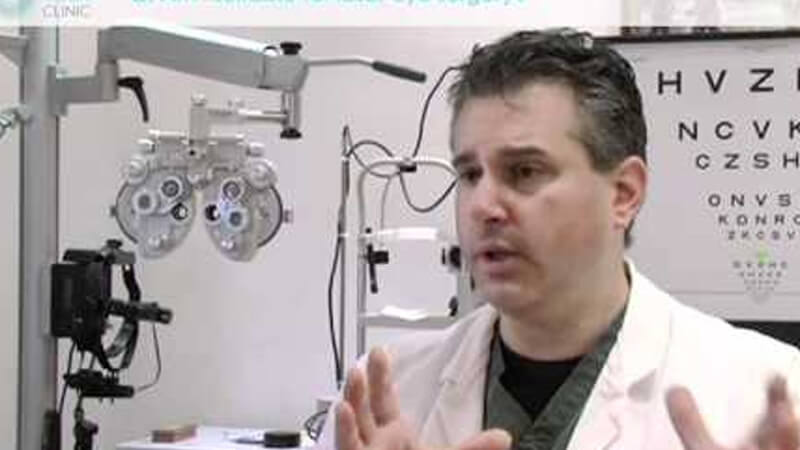
Isabella, a patient, describes her challenges with extreme shortsightedness and Mr. Carp talks about High Profile treatments aimed at treating this problem

Don’t believe everything you hear – refractive surgery can treat many common eye conditions.Many people believe that laser eye surgery cannot treat certain conditions, such as astigmatism or presbyopia (the affects of age on the eye). This is largely because so many clinics refuse patients who have these conditions.

However, this says more about the limits of those clinics than of refractive surgery itself. The eye surgeons at the London Vision Clinic have been successfully treating these conditions for years.

Pioneering laser eye surgery treatments

Our goal is to provide the ultimate in surgical expertise, patient care and customer service. That means doing our utmost to help any patient, no matter how complex or severe their condition may be.

Over many years of research and practice, we have pioneered a range of unique refractive surgery techniques and technologies. These have helped expand the scope of laser eye surgery, and ensured that we can help almost any patient.

Laser Blended Vision, for example, is a revolutionary treatment for presbyopia - the effect of ageing on the eye. Rather than turn away patients over 40, we welcome them with the good news that they may soon be rid of their reading glasses.

The treatment (blended vision) has allowed me to be more effective, efficient and flexible in every day life… Simple tasks like reading sms and emails on small screens, or DIY tasks or driving the car no longer requires glasses off/on/off or the quest for ‘where did I leave them’. You soon forget how frustrating the need for glasses were and what you missed out on in everyday surroundings when you had them off! Now my awareness is total.

Robin Haddon

Equally important are our High Profile treatments for very high prescriptions, such as severe myopia. This laser eye surgery, at prescription strengths far beyond the norm, is made possible by the most advanced testing equipment in the world, and our detailed, individually tailored treatment plans.

Find out whether you are suitable for laser eye surgery at the London Vision Clinic by contacting us today. One of our Patient Care Coordinators will take you through the process.
Short sightedness
Treatable eye conditions: myopia (short-sightedness) If you are short-sighted, your eyeball is slightly longer and rounder than it should be. This means the light converges just in front of the retina, creating a blurred image at distance. Treating myopia
Long sightedness
If you're long-sighted, your eyeball is shorter and flatter than it needs to be. That means it focuses the light on a point just behind the retina, creating a blurred image. Treatable eye conditions: hyperopia (long-sightedness) Hyperopia affects near vision first, and later in life both distance and near vision. Often, if you're long-sighted, you can sharpen near objects with a conscious effort, which tends to cause headaches.
Astigmatism
Treatable eye conditions: astigmatism It's often claimed that laser eye surgery cannot treat astigmatism. And yet, at the London Vision Clinic, we've been using laser surgery to treat astigmatismsymptoms for many years. Astigmatism Treatment
Presbyopia
Treatable eye conditions: presbyopia Can laser eye surgery stop time? People often ask how long the effects of laser eye surgery will last - will they wear off? The answer is no: the effects are permanent. The trouble is, we are all getting older, and that process does affect the performance of our eyes. You may have been told that laser surgery is powerless against that process. That's true - except at the London Vision Clinic.
Keratoconus
Treatable eye conditions: keratoconus Keratoconus is a severe form of astigmatism, in which the cornea is slightly weaker than normal. This means the shape of the cornea progressively distorts, creating a cone shape at the front of the eye. Although glasses or contact lenses can help in the early stages, they become less effective as the condition develops.
Glaucoma
Glaucoma is a complicated disease in which damage to the optic nerve leads to damaging vision, and progressive, permanent and irreversible vision loss, if left untreated. Glaucoma is the second leading cause of blindness. In England, about 480,000 people have chronic open-angle glaucoma. Of these about 1 in 50 above 40 years old and 1 in 10 people above 75 years old.